A hazardous tree assessment tells you whether a tree on your property is safe or a risk waiting to happen. Trees across Windsor, Essex County, and the surrounding communities deal with heavy conditions year-round like… high winds, ice storms, Emerald Ash Borer pest damage, and shifting soil near Lake Erie. Any of these conditions can quietly weaken a tree that looks perfectly fine from the outside. Century Tree Service provides professional tree risk assessments for homes and businesses in Kingsville, Windsor, Leamington, Amherstburg, Tecumseh, Lakeshore, and throughout Essex County. From business owner Devin Mills personally evaluates every tree.
Why Trees Become Hazardous
Most trees do not fall without warning. The problem builds slowly. Structural defects, internal decay, root damage, and pest infestations weaken a tree from the roots to the crown over months or years. The outer bark often stays intact long after the wood inside starts to rot. That is what makes tree hazards so difficult for property owners to spot without a trained eye. The tree can look healthy right up until the point it fails.
A tree qualifies as a hazard when two conditions are both true. First, it must have a significant defect: a crack, a cavity, advanced decay, or a compromised root system. Second, that defect must put a person, structure, vehicle, or power line within striking distance. A decayed tree in the middle of a field is not the same problem as a decayed tree hanging over your driveway.
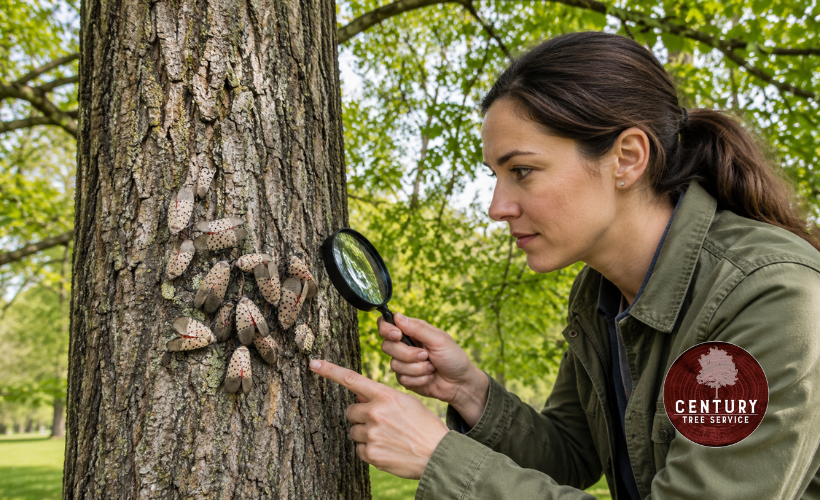
Ash trees in Essex County deserve special attention. Emerald Ash Borer infestations move through the tree from the crown downward, killing the structural wood while the bark looks normal. By the time the damage is visible on the outside, the tree may already be dangerous. If you have ash trees on your land, an annual professional tree risk assessment is not optional it is necessary.
6 Signs a Tree Needs Professional Evaluation
You do not need to be a certified arborist to notice warning signs. These six indicators mean it is time to call for a closer look.
- A lean or shift in position that appeared after a storm, which can signal root anchor failure
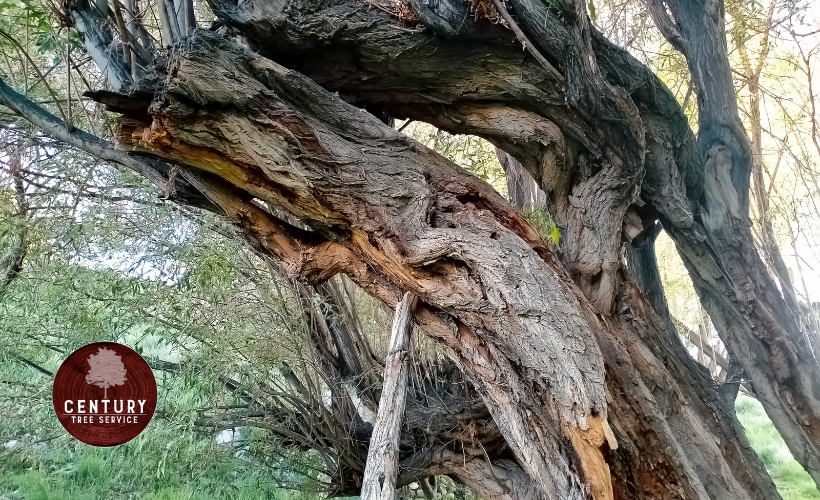
- Cracks in the trunk or major branches that cut through the wood, not just the surface bark
- Fungal growth at the base or on the bark — mushrooms, shelf fungi, or conks are signs of internal decay
- Dead limbs hanging in the canopy, known as widow makers, which fall without warning and do not flex in wind the way healthy branches do
- Heaving or lifted soil around the base of the tree, which often means the roots are failing
- Leaf dieback or a thinning canopy that points to disease, pest damage, or a decline in overall health
Call an arborist if you notice any one of these signs. If you notice several at once, do not wait act fast.
How a Professional Tree Risk Assessment Works
A professional tree risk assessment takes a detailed look at a variety of factors: the tree’s structure, the condition of its roots, potential decay, and what it could damage if it failed. The process moves through distinct stages based on what the arborist finds.
Stage 1 and Stage 2: Visual Evaluation
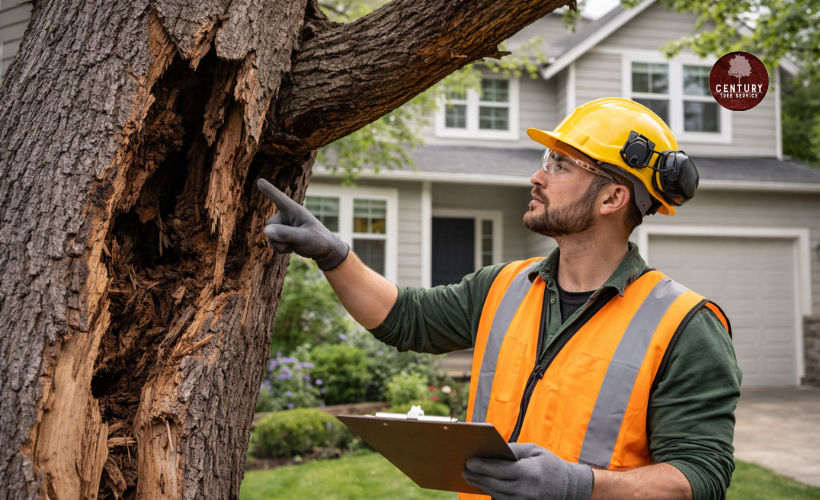
Every assessment starts with a full 360-degree visual evaluation. The arborist examines the root flare, trunk, main branches, and leaf canopy for visible defects — cracks, cavities, dead wood, abnormal lean, co-dominant stems, and fungal growth. This level of evaluation identifies most dangerous trees and determines whether further testing is needed.
Devin Mills carries out this evaluation personally on every Century Tree Service visit. He explains what he finds in plain terms so you understand the issue clearly, not just the technical detail.
Stage 3: Site Analysis and Growing Conditions
Once the tree itself is evaluated, the tree specialist looks at the surrounding area. Soil conditions, the tree’s species, its history of growth, the slope of the land, and the proximity to structures all shape the final risk rating. A mature oak with root damage sitting over a home or business in Kingsville is a very different situation than the same tree standing alone in an open yard.
Stage 4: Advanced Diagnostic Testing
When the initial evaluation reveals possible internal decay that cannot be confirmed from the outside, advanced testing provides the answer. Resistance drilling — sometimes called Resistograph testing sends a small probe into the wood to measure how hard or soft the material is as it moves through. Soft or missing resistance means decay or a cavity is present. The test is quick, precise, and helps the arborist determine the health of the wood that cannot be seen from outside. Not every tree needs this step, but when it does, the results guide accurate tree care decisions.
Final Report and Recommendations
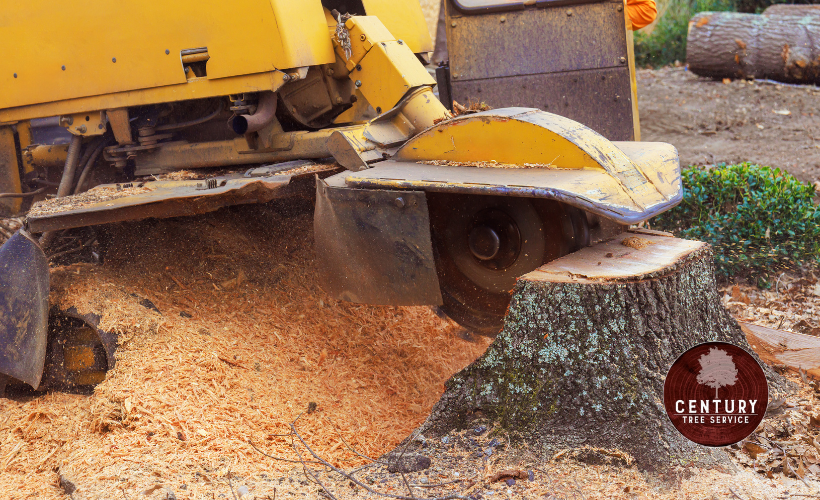
The assessment ends with a clear risk rating and written recommendations. Depending on what the arborist finds, options may include pruning, cabling and bracing, stump grinding, or removal. Century Tree Service takes a preservation-first approach. If trees on your property can be made safe another way, that is the recommendation you get. The goal is to give you peace of mind — not to push you toward unnecessary work.
What Happens After the Assessment
A hazardous tree assessment does not always lead to removal. The point is to bring the risk down to a safe level using the most appropriate method. Century Tree Service recommends removal only when no other professional tree care option can reduce the hazard.
Pruning and Trimming
Removing dead, weak, or diseased branches through targeted trimming takes weight off stressed limbs and eliminates the most immediate failure points. This is the most common outcome after an assessment. It protects your property, helps preserve the beauty of your landscape, and keeps the tree growing strong for years to come.
Cabling and Bracing
Where a tree has a weak branch union or a trunk at risk of splitting, steel cables and bracing rods provide structural support. This method transfers stress away from the problem area and into stronger sections of the tree. It is a practical option when the tree has value and the defect can be managed without removal.
Removal
When a defect cannot be corrected and the risk of injury or property damage is too high, removal is the right call. Century Tree Service does not make this recommendation lightly. Devin Mills explains the reason clearly and walks you through the process before any work starts.
How Often Should You Schedule an Assessment?
Properties in Windsor and Essex County should have a professional arborist inspect their trees at least once a year. Catching structural changes, disease, and infestations early prevents emergencies that cost far more to fix.
Schedule an additional arborist visit right away after any of the following.
- A weather event with wind gusts above 80 km/h
- An ice storm with heavy accumulation on branches
- Excavation or construction within 3 metres of a tree’s root zone
- Any sudden change in lean, canopy density, or ground stability around a tree
Ash trees across Essex County should be a priority for annual arborist evaluation due to Emerald Ash Borer damage, which weakens structural wood rapidly and with limited external symptoms in early stages. A documented professional tree risk assessment can also support insurance claims by showing that a property owner took steps to prevent a known hazard that could pose a risk to people or structures. It also serves as useful evidence that due diligence was exercised if a tree-related incident occurs and potentially results in a dispute.
Schedule Your Assessment with Century Tree Service
A professional hazardous tree assessment is the clearest way to know whether the trees on your property are safe. Century Tree Service serves Windsor, Kingsville, Leamington, Essex, Amherstburg, Tecumseh, Lakeshore, Wheatley, and the broader Essex County area. Devin Mills personally handles every assessment — from the first call to the final report. No middlemen, no handoffs, no pressure.

Century Tree Service is fully licensed and insured. Free estimates are available seven days a week. Call 519-324-7118 to book your hazardous tree assessment today.