A tree becomes dangerous when it shows health failure or a serious drop in tree health. The clearest Dangerous Tree Signs include sudden leaning, deep trunk cracks, pest damage, and large dead branches. When you see them, it’s time to call an arborist right away. At Century Tree Service, owner Devin Mills brings over five years of tree care to properties across Kingsville, Windsor, and Essex County.
Most homeowners notice the signs your tree needs professional tree services help only after it fails and the damage is done. This guide explains the signs that a tree is in trouble, what each one means, and the right time to call an arborist before a small problem turns into emergency work.
What Makes a Tree Dangerous?
A tree is dangerous when its roots, trunk, or branches lose the strength to stay upright. A dangerous tree may fall on homes, cars, or utility lines. A tree risk assessment weighs whether the tree is likely to fail and what it could hit.
Tree risk has two parts: the chance of failure and the target in the fall zone. A certified arborist can weigh both and judge the real risk of the tree falling. This is why an honest tree inspection beats a guess from the ground, and why knowing when to call an arborist protects your family and your property.
Warning Signs That Call for a Professional
The signs that indicate real danger point to failures you cannot safely test on your own. Spotting these signs early gives you time to act, because the gap between a visible symptom and a full failure is short.
The Tree Is Leaning or the Soil Is Heaving
When a tree is leaning suddenly, the roots of your tree may be failing on one side of the tree. Lifted soil and exposed roots signal root damage that is destabilizing the tree from below.
A lean that a tree grew into over many years is usually stable. A sudden new lean is not. When the soil lifts and cracks on one side, the root plate is tearing loose from the ground. These are clear signs of distress, and they need a same-day look from a professional.
Deep Cracks and Weak Unions in Large Branches
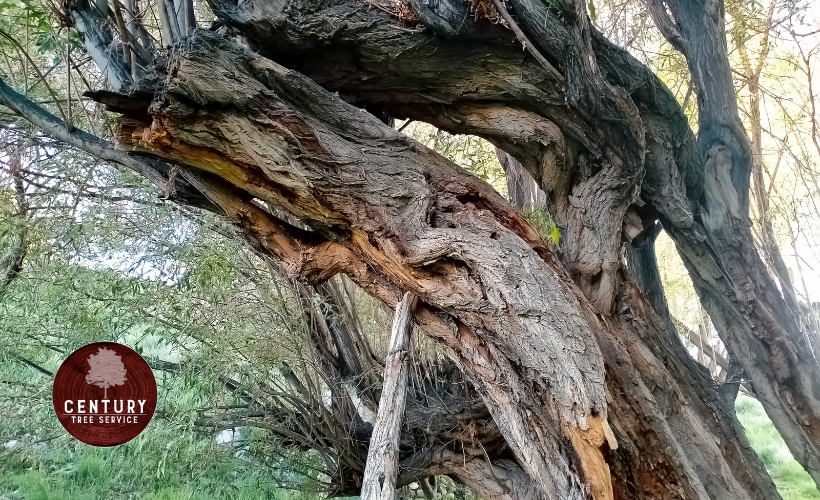
Deep trunk cracks, or splits where large branches meet, mean parts of the tree have lost strength. A cracked union can fail without warning and drop heavy wood.
Bark furrows as a tree grows, so not every line is a threat. The signs that indicate danger run deep, sit on opposite sides, or open at a V-shaped fork. A crack that seeps dark fluid points to decay inside, and an arborist can tell how much sound wood remains.
Pests, Dead Wood, and Fungal Growth
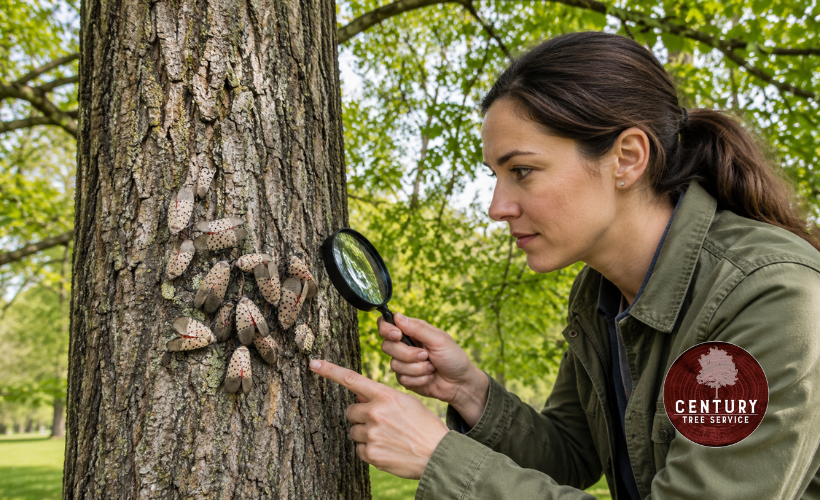
Shelf fungi and mushrooms on the trunk often signal decay. Dead wood attracts insects that harm tree health, and they can spread to nearby trees.
You cannot see rot inside a trunk, but you can see the fungus it feeds. A single pest problem can grow into a full infestation that weakens the wood from within. Owner, of Century Tree Service ~ Devin Mills checks the root flare and canopy for insects on every job, because early action protects nearby trees and keeps small tree problems from spreading.
Crown Dieback and Signs of Stress
Dead branches at the top, thinning leaves, and early color are signs of stress in the crown. These signs of distress often trace back to root stress or disease.
The crown is the tree’s report card. When the top branches die first, the roots usually cannot feed the whole tree. Compare your tree to healthy neighbors, and an arborist can diagnose whether disease or compaction is the cause.
Watch for these hazards, and treat any as a sign that your tree needs a professional:
- A fresh lean paired with cracked, lifted, or heaving soil at the base
- Deep cracks, or a split where large branches join the main trunk
- Insects, dead wood, or shelf fungi and mushrooms on the lower trunk
- Dead or hanging branches over your roof, driveway, or utility lines
- A tree that is dead, sounds hollow when tapped, or is dropping large pieces of bark
- A branch that rests on your roof or fence, or that touches a power line
Reach out to an arborist if you see any of these tree issues exist on your property…. if they do the tree should be taken down.
Can You Save the Tree, or Does It Need to Be Removed?
A certified arborist can determine whether to prune and save your tree or remove a tree that is beyond help. Careful tree pruning can often help preserve the tree without removing the tree at all.
Not every hazard means removal. Often an arborist can help by choosing the gentlest fix that works. A certified arborist can prune dead wood and weak limbs to rebalance the canopy and protect the crown. When you prune early, you avoid bigger tree problems later, and an arborist can tell whether a tree is worth saving.
Some trees are past saving. When the tree is dead through the trunk, it will need to be removed before it fails. An arborist can assess whether your tree is safe to keep, then decide if tree removal is the safer path. Certified arborists weigh cost, safety, and the value of the tree before they advise tree removal.
Storm Damage and Emergency Tree Work
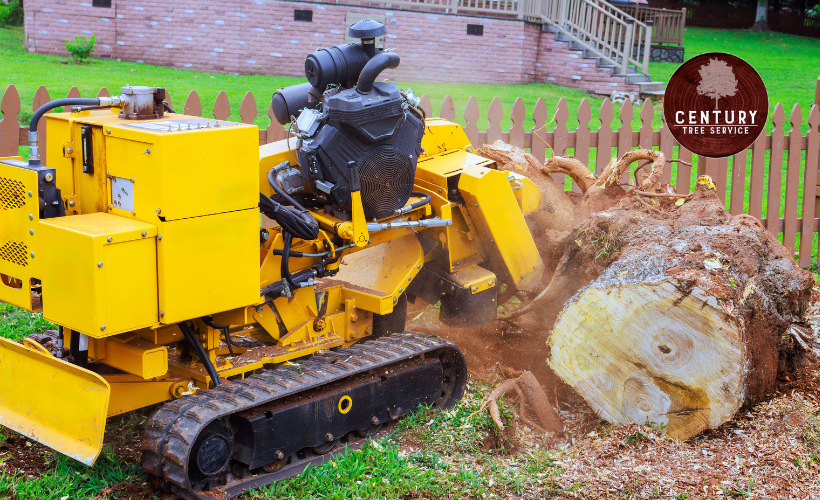
Storm damage often creates sudden tree damage that needs fast action. Emergency tree removal clears fallen trunks and hanging limbs so your property is safe again.
High winds test weak trunks and loose limbs. After a storm, do not approach leaning wood or branches on power lines. Call for professional help instead. Century Tree Service answers emergency calls and provides emergency tree care across the region. If a limb threatens your home, call an emergency crew rather than climbing yourself.
What to Do When You Spot Dangerous Tree Signs
When you see a warning sign, keep people around the tree clear of the fall zone, avoid cutting the tree yourself, and book a tree inspection. A tree care professional can measure hidden decay that is impossible to judge safely from the ground.
Follow these steps while you wait for expert tree care:
- Move cars and furniture so nothing sits where the tree may land.
- Keep children and pets back, and do not put the tree under extra load.
- Photograph the trunk, base, and canopy so a professional can track changes over time.
- Never touch a branch on a power line, and report it to your utility.
- Give us a call for a licensed and insured inspection from a local crew.
Tree work is among the most dangerous jobs there is. A ground-level guess about a hollow trunk causes harm to the tree and to people every year. A trained crew takes that risk off your shoulders.
Frequently Asked Questions
How do I know if it is time to call an arborist?
If you are not sure if your tree is in trouble, look for leaning, cracks, or fungal growth. Any one of these is a warning sign. A certified arborist can make the final call after a close inspection.
Can an arborist save a leaning mature tree?
Sometimes. A mature tree with minor root damage may recover with support and pruning. A certified arborist can check whether the roots still anchor the tree, then advise repair or tree removal based on the real risk.
What should I do after storm damage?
Stay clear of fallen limbs and any wood near power lines. Call for professional help and get an emergency crew out right away. Quick action prevents further tree damage and keeps your family safe.
Protect Your Property Before the Next Storm
Reading Dangerous Tree Signs early gives you time to act on your terms instead of during an emergency. A new lean, a deep crack, a fungal conk, or a dead limb over your roof all point the same way: reach out for professional help before the tree decides for you. For a full range of professional tree care services and honest advice, Century Tree Service is ready to help across Kingsville, Windsor, and Essex County.

Give Devin a call at 519-324-7118 today for your free inspection.