Tree pruning vs trimming comes down to purpose. Pruning removes specific branches to protect the health and structure of a tree. Trimming shapes growth to control clearance and appearance. Most properties across Windsor Essex need both at different times, and a few trees need neither.
Homeowners hear the two words used as if they mean the same thing. They do not. The difference changes what a crew cuts, when they cut it, and what your tree looks like five years from now. Devin Mills, the owner-operator at Century Tree Service, sees the confusion on almost every estimate, usually after a neighbour recommended one word and a contractor quoted the other.
This guide shows how to tell the two apart, when removal is the better answer, what the work costs, and how to hire a crew you can trust.
The Difference Between Tree Trimming and Pruning
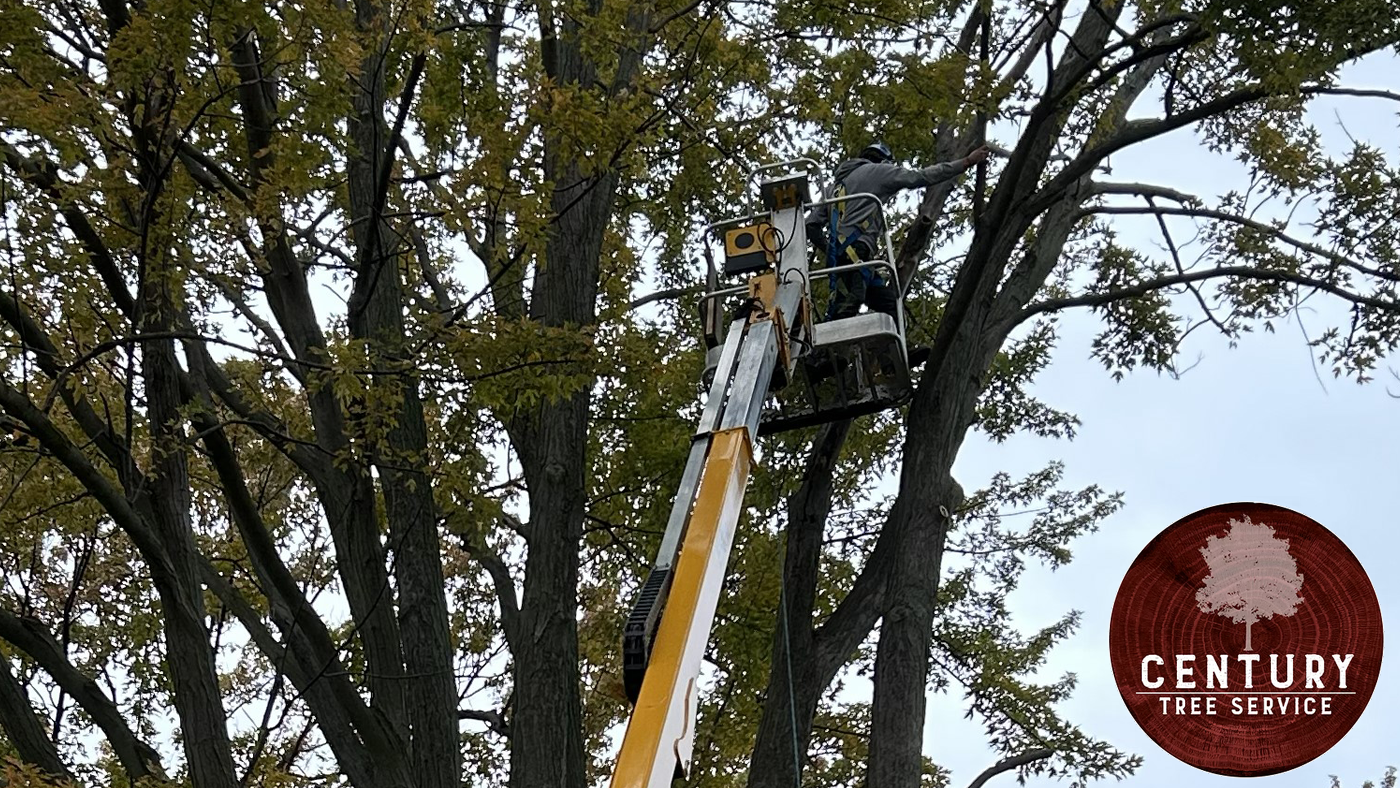
Pruning involves selective cuts made for a biological reason: deadwood, disease, weak attachment, or crossing limbs. Trimming targets shape and clearance for a practical reason, such as a branch over a roof or a canopy blocking light.
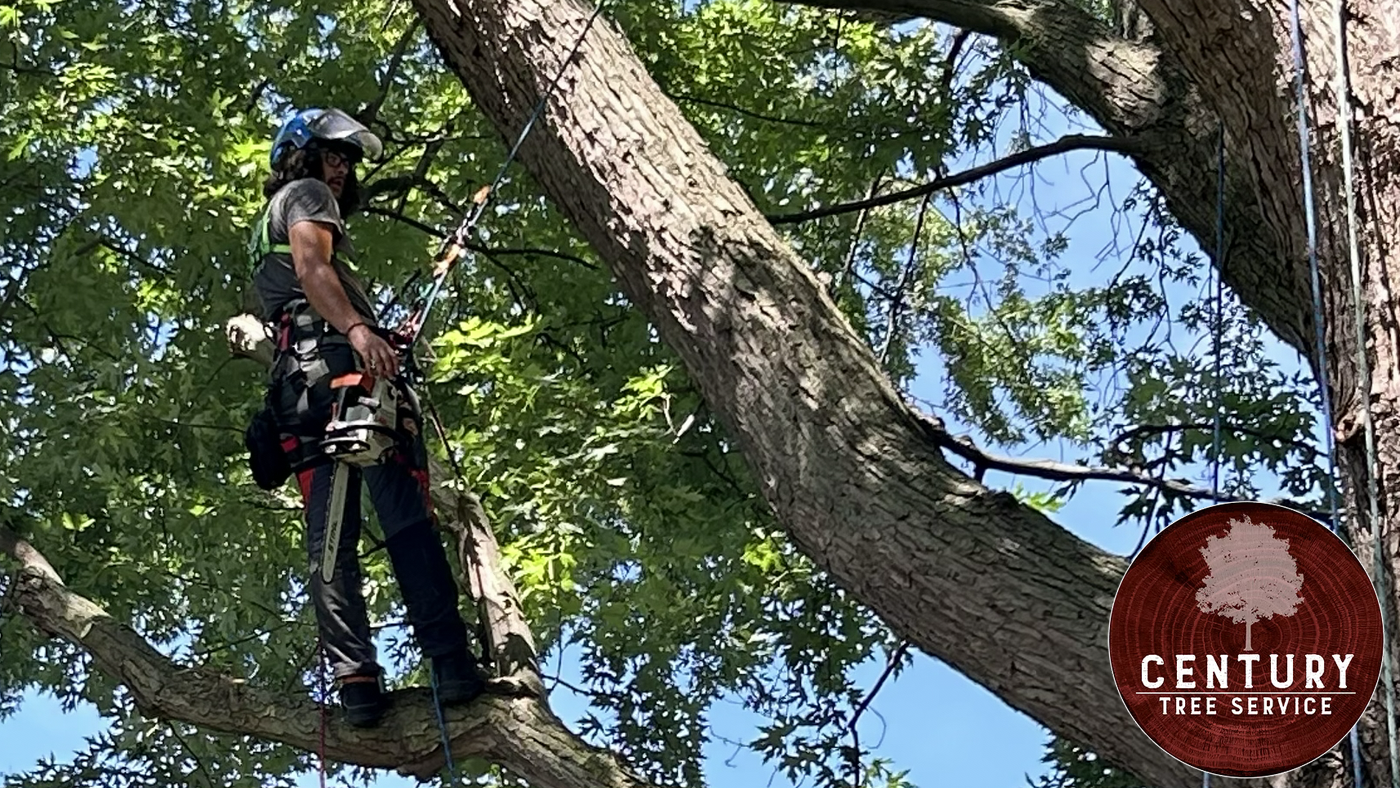
Proper pruning starts with a deep understanding of tree biology. Arborists look at how a tree is built, pick the branches that need to go, and cut each one just past the branch collar, the raised ring where a branch joins the trunk. A cut in that spot heals on its own and minimizes stress on the tree. This is the core idea in arboriculture: work with the tree’s growth, not against it.
Trimming works the other way. The trimming process removes growth across a whole area to reach a goal, like clearing a driveway, lifting a canopy off a garage roof, or pulling limbs off a service drop.
The wrong choice causes lasting harm. Trimming a tree that needed pruning leaves the weak spot in place and strips healthy leaves. Pruning a tree that only needed clearance leaves the hazard over your roof.
| Tree Pruning | Tree Trimming | |
|---|---|---|
| Purpose | Health and structure | Clearance and shape |
| Cuts | Selective, branch by branch | Broader, area based |
| Best season | Dormant, late fall to early spring | Most of the year |
| Typical result | Stronger, longer lived tree | Safer, tidier property |
When Does a Tree Need Pruning?
Pruning your trees makes sense when deadwood, crossing limbs, a narrow branch union, storm damage, or a diseased section appears. Regular pruning also builds one strong central leader on a young tree before poor form sets permanently — the earlier the better, which is why new growth training pays off more than any later corrective work.
Dead branches inside a full canopy never recover, and they drop without warning in the wind off Lake Erie. Removing dead and damaged wood early protects long-term tree health and keeps decay from spreading into the trunk.
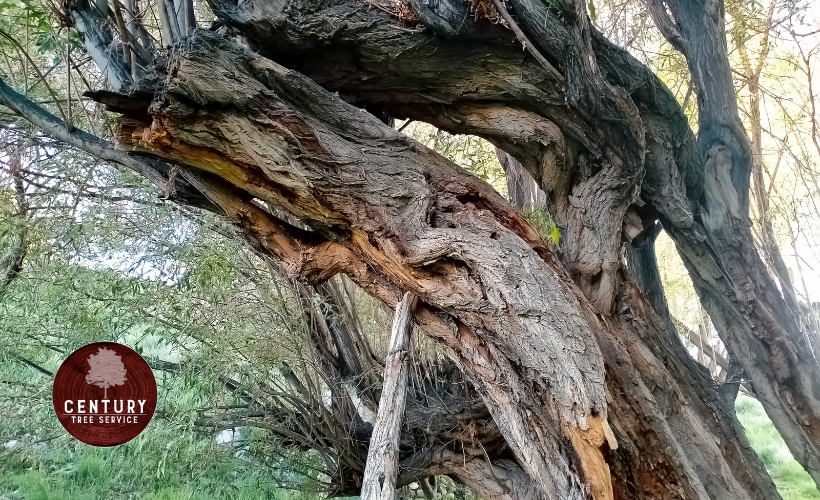
Structural problems are harder to spot and matter more. A narrow branch union is the sharp V shaped joint where two stems meet at a tight angle. Bark gets trapped between them instead of wood fusing them, and the joint splits under ice load. Silver maples across Essex County are prone to it.
Pruning helps in a quieter way too. Thinning a dense canopy lets air move through the branches, which dries out the damp that pests and diseases need. That one change can improve tree health more than any spray.
Signs that point to pruning rather than trimming:
- Bare, brittle deadwood scattered inside an otherwise full canopy
- Two limbs rubbing together with worn bark at the contact point
- A split or dark seam running down from where two stems join
- Mushrooms or shelf fungus on a limb or at the base
- A young tree with two competing stems racing for the top
Pruning Windows by Species
Timing follows the tree, not the calendar. A cut made in the wrong month invites disease or triggers weak regrowth. General windows for common Windsor-Essex species:
- Oak and hickory — dormant season only, roughly November through March, to avoid oak wilt spread by beetles drawn to fresh cuts
- Maples and birches — late summer or early winter; avoid late winter and early spring when sap flow is heavy
- Fruit trees — late winter before buds swell
- Most other hardwoods — late fall through early spring while dormant
- Deadwood and hazard limbs — any time, on any species
Mature trees generally need attention every three to five years.
When Does a Tree Need Trimming?
Trimming is more suitable when growth obstructs something physical: a roofline, a driveway, a sight line at the end of a lane, or the sunlight your lawn and garden depend on.
Regular professional tree trimming protects the safety of your property and the look of your property at the same time. Branches touching siding hold moisture against the house and give squirrels a bridge onto the roof. Limbs that obstruct a public sidewalk become a liability question for a commercial site. Good cuts keep the beauty of your trees intact while solving the clearance problem.
Power lines are the exception. Anything growing into a primary line belongs to the utility, not to a homeowner and not to a private crew.
Ownership matters too. A boulevard tree between the sidewalk and the curb is often a city-owned tree, and your local municipality handles that work itself. Confirm who owns the tree before booking tree trimming services.
When Tree Removal Is the Right Call
Removal makes sense when a tree is dead, when decay has reached the trunk or root plate, when more than half the canopy has failed, or when a tree leans toward a target with fresh soil cracking at its base.
Cutting is the last option, not the first. A tree with one broken limb, a thin canopy, or a fungal bracket on a single branch is often a candidate for pruning. Property owners get told to remove trees that a careful assessment would have saved.
Some situations leave no room for that judgment. Ash killed by emerald ash borer is the clearest case in this region. Once an ash dies, the wood turns brittle fast, and a standing dead ash grows more dangerous with every season it waits. Trees compromised by storm damage — split leaders, hangers caught in the canopy, root plates lifted after high wind — are the other clear removal cases.
How to Tell If a Tree Is Dead
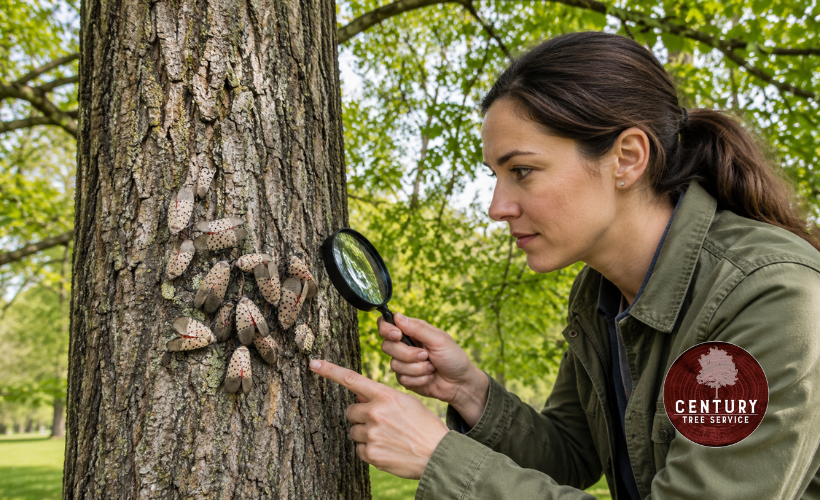
A dormant tree and a dead tree can look identical from the driveway in February. Three quick checks separate them:
- Scratch test — nick the bark on a small twig with a fingernail or knife. Green underneath means alive. Brown and dry means that branch is dead. Repeat on several branches at different heights.
- Bud check — living branches carry firm, pliable buds through winter. Dead branches carry brittle buds that snap off cleanly.
- Bark and trunk — large patches of loose or missing bark, deep vertical cracks, mushrooms at the base, or a hollow sound when you tap the trunk all point to structural failure.
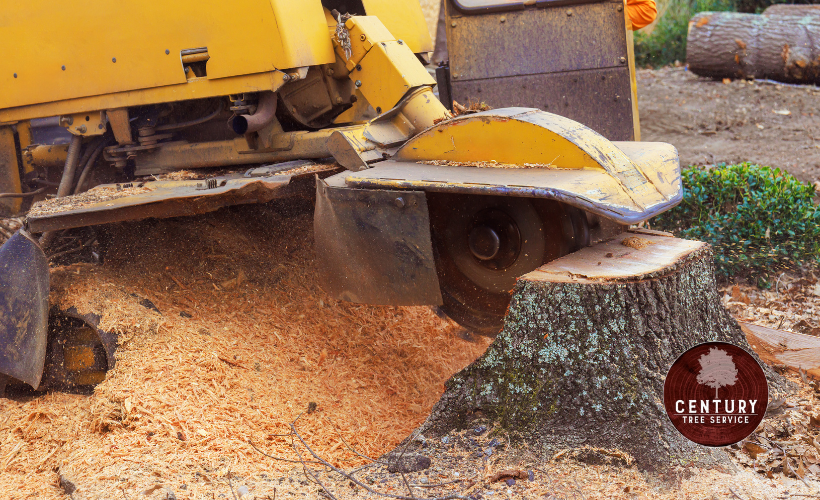
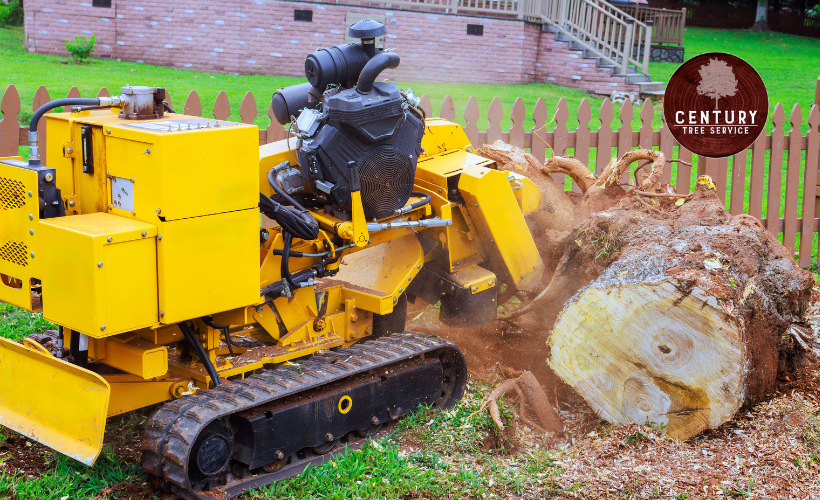
Removal is rarely the end of the tree work. Stump grinding usually follows, and a chipper turns the branches into mulch on site so nothing is left behind. A professional tree crew should explain both steps in one quote.
What Tree Service Costs in Windsor-Essex
Pricing depends on tree size, species, condition, and access. As a rough guide for local property owners:
- Small trees under 25 feet — $300 to $800
- Medium trees 25 to 50 feet — $800 to $1,500
- Large trees over 50 feet — $1,500 to $3,500 and up
- Stump grinding — usually quoted alongside removal, priced by stump diameter
Trees near hydro lines, buildings, or greenhouses cost more because they need controlled rigging or a crane. A dead ash the crew can drop in one piece from an open field is at the bottom of the range. The same ash beside a house is not.
Permits and Bylaws
The Municipality of Leamington does not currently require a permit to remove a tree on private residential or agricultural property, and most Essex County municipalities are similar. Two exceptions matter:
- Natural heritage areas — the County of Essex Natural Heritage Areas Preservation Bylaw can apply to designated woodlands and features near Point Pelee or other conservation lands.
- Nesting season — the federal Migratory Birds Convention Act protects active nests, typically April through August. A crew should check the tree before cutting during those months.
Confirm the rules for your address before scheduling. A reputable arborist will raise these questions during the estimate rather than after the saw is running.
How to Verify a Tree Company Is Legitimate
Anyone can call themselves a tree company. Very few can prove it. Before you sign an estimate, ask for four things:
- Commercial general liability insurance — a certificate showing coverage, ideally $2 million or more
- WSIB clearance certificate — proof the crew is covered under Ontario workplace insurance, so an injury on your property is not your bill
- Written estimate — the reason for each cut and the full price, in writing, before work starts
- ANSI Z133 compliance — the industry safety standard for tree work; a legitimate crew knows what it is
Century Tree Service is owner-operated, fully insured, and WSIB compliant, and Devin provides proof of both on request.
When to Schedule Tree Care in Essex County
The best time to prune structurally is late fall through early spring. Trees sit dormant, canopies are bare, wounds seal before insects become active, and crews work faster with clear sight lines, which usually lowers your price.
A bare canopy also reveals branch architecture that summer leaves hide. Arborists have the knowledge to read that structure and spot the types of tree defects a homeowner walks past daily. Firm ground protects lawns from equipment ruts, and booking tree care services ahead of ice season beats calling after a failure.
Three steps make tree maintenance planning easier:
- Walk the property in late autumn once leaves drop, and photograph anything dead, split, or leaning.
- Book an assessment before the first ice event rather than after it.
- Ask the arborist to name the reason for every cut. A specific reason means a considered plan.
What This Means for Your Property
Ask what the goal is before you prune or trim your trees. If the goal is health, you want pruning. If the goal is clearance, you want trimming. If the trunk or roots have failed, you want professional tree removal, and no other answer is honest.
Choosing a tree service in Windsor or Essex County comes down to one test: will they assess your trees and explain each cut, or quote a number and start a saw? Devin at Century Tree Service names the defect and recommends the smallest cut that solves it.
Frequently Asked Questions
Is pruning or trimming better for my tree?
Neither is better, because they solve different problems. Pruning protects health and structure. Trimming controls shape and clearance. A healthy tree growing into a roofline needs trimming. A structurally weak tree standing away from buildings needs pruning.
How often should trees be pruned in Ontario?
Most mature hardwoods benefit from structural pruning every three to five years. Young trees benefit from lighter work every two years while their form develops. Storm damage should be addressed as soon as conditions allow safe access.
Can I prune my own trees?
Small branches you can reach from the ground are reasonable with sharp, clean tools. Anything requiring a ladder, a chainsaw held overhead, or work near power lines belongs with an insured crew carrying proper rigging equipment.
Does trimming a tree make it grow back thicker?
Heavy topping triggers dense, weakly attached regrowth that is more likely to fail later. Reduction cuts made back to a lateral branch control size without that response, which is why cut placement matters more than cut volume.
How much does tree removal cost in Windsor-Essex?
Small trees run $300 to $800, medium trees $800 to $1,500, and large trees $1,500 to $3,500 or more. Access, proximity to buildings and hydro lines, and species condition are the main factors that move a job up or down that range.
Do I need a permit to remove a tree in Leamington or Kingsville?
Private residential property owners generally do not need a permit to remove a tree in Leamington or the surrounding Essex County municipalities. County-level natural heritage bylaws and federal migratory bird protections during nesting season can apply, so confirm before scheduling.
Talk Through Your Trees With a Local Arborist
Tree pruning or trimming stops being confusing once someone stands under the tree and names what they see. Century Tree Service provides tree trimming and pruning services Windsor, Kingsville, and Leamington property owners rely on, with free onsite assessments and a plain explanation of what each tree needs.

Call Devin at 519-324-7118 to book an on-site tree inspection visit.